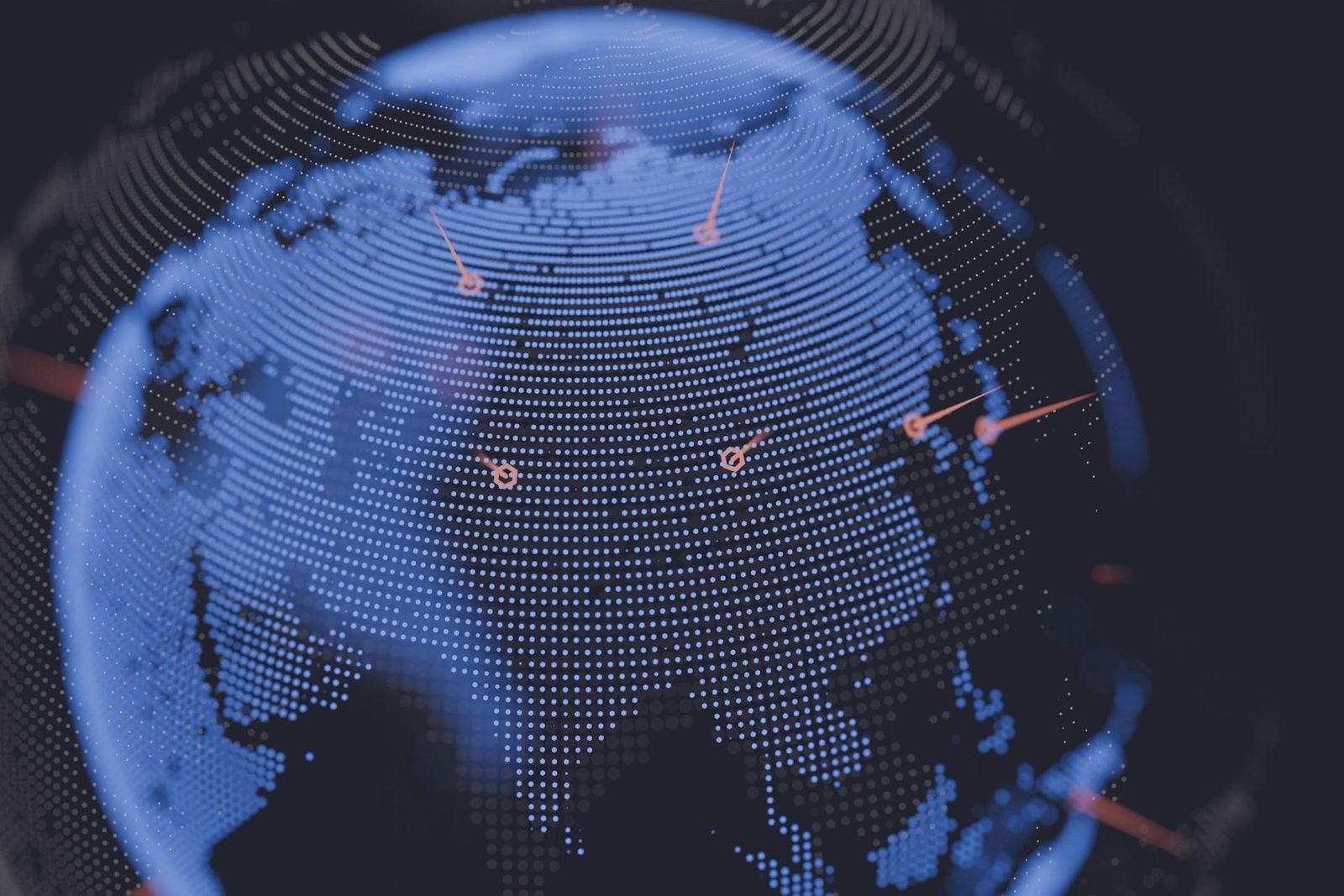
VPX Network
Ein geplantes, selbstheilendes, dezentrales Mesh-Netz globaler Knoten, das Routing-Entscheidungen ausführen, die Qualität prüfen und Single Points of Failure beseitigen soll.In Entwicklung.
Was es
leistet
VPX Network ist die geplante physische und logische Infrastrukturebene des VPX Ecosystem - ein weltweit verteiltes Mesh aus Knoten, die gemeinsam die von VPX Protocol festgelegten Routing-Anweisungen, Qualitätsmessungen und Betrugsprüfungen ausführen werden. Das Protocol legt die Regeln fest, das Network wird sie durchsetzen.
Das Network besteht aus vier spezialisierten Knotentypen - Fraud, Routing, Analytics und Gateway -, die jeweils eine eigene Funktion im Ökosystem erfüllen. Die Knoten kommunizieren Peer-to-Peer über ein verschlüsseltes Overlay-Netzwerk. Es gibt keinen zentralen Koordinator: Routing-Entscheidungen, Betrugskonsens und Qualitätsbewertung entstehen allesamt aus der verteilten Gesamtheit der Knoten.
Selbstheilende Architektur bedeutet, dass das VPX Network auch dann mit voller Kapazität weiterläuft, wenn ein erheblicher Teil der Knoten offline ist. Routing-Funktionen leiten automatisch um. Die Qualitätsüberwachung läuft über die verbleibenden Knoten weiter. Der Betrugskonsens bleibt bei einer Beteiligung von 2/3+ gültig. Für Netzbetreiber heißt das: eine Routing-Infrastruktur ohne geplante Wartungsfenster und ohne einzelne Abhängigkeit, die einen Totalausfall verursachen kann.
Nur auf EnglischDie folgenden Details und das Whitepaper sind auf Englisch veröffentlicht.
Wie die Ebene operates
Node Registration
Nodes register on-chain by staking VPXN tokens. Registration records the node's capabilities (Fraud, Routing, Analytics, Gateway), geographic region and operator identity.
Peer Discovery
Nodes discover peers over the base validator networking layer (the Sui-derived mesh), maintained continuously. A newly registered node joins the mesh at the next epoch boundary after its on-chain registration confirms.
Function Assignment
Nodes are assigned routing tasks, fraud validation requests and quality measurement duties by the Protocol's on-chain scheduler - proportional to stake weight and declared capacity.
Distributed Execution
Assigned tasks are executed by each node independently. Results are submitted to the Protocol for consensus. Outlier results are challenged and penalised via slashing.
Self-Healing Failover
If a node becomes unreachable, its tasks are automatically redistributed to the next eligible node by the on-chain scheduler within a single commit round. No manual intervention required.
Ausgelegt für Netzwerk-Skalierung
Decentralised Node Mesh
No central routing server. No single point of failure. Every routing, fraud and quality function is executed across a distributed population of independent nodes.
Self-Healing Architecture
Automatic failover within a single commit round of node loss. Tasks redistributed by the on-chain scheduler without human intervention. The Network continues at full capacity with up to 1/3 of validator stake offline.
Global Distribution
Designed for nodes across 40+ countries. Geographic diversity is intended to keep routing paths, fraud validation and quality measurement close to traffic origin for minimal latency.
Stake-Weighted Quality
Nodes with higher stake have more to lose from submitting inaccurate results. Economic incentives align every node's behaviour with truthful, high-quality participation.
Encrypted Overlay
All node-to-node communication is encrypted using TLS 1.3 with certificate pinning. The overlay network is inaccessible to external observers - only authorised nodes can participate.
Horizontal Scale
The Network scales by adding nodes. More nodes mean more throughput, more geographic coverage and greater resilience - with no architectural changes to the Protocol.
Unter der Haube
Join the network as a node or consumer
Carriers can connect to the VPX Network as traffic consumers via the standard Gateway Node interface. Node operators join by staking VPXN and running the open-source node software.
Wer beteiligt sich an this layer
Node Operator
Operate one or more VPX nodes to earn epoch rewards and routing fees. Choose your node type(s) based on your infrastructure capabilities and stake position. No single operator dominates the network.
Carrier / Operator
Benefit from a routing infrastructure without a single point of failure. Traffic flows through the VPX Network rather than a centralised routing server - providing resilience that traditional wholesale platforms cannot match.
Enterprise
Connect communications infrastructure to the VPX Network via a Gateway Node. Access decentralised routing, fraud validation and quality intelligence without operating Protocol-level infrastructure.
Bereit zur Teilnahme an Network?
Unser VPX-Team antwortet in der Regel innerhalb von 2 Werktagen. Das vollständige Whitepaper steht registrierten Teilnehmern zur Verfügung.